Light Adjustable Lens vs Vivity: What I Tell My Patients
Published October 13, 2026 · Medically reviewed by Todd Driver, MD
Quick answer: I would say the LAL+ is my first choice and the lens I would use, as long as you're okay doing the extra visits and okay with the extra cost. The Vivity is a good choice if you don't want to deal with either, or if you are not a good candidate for the LAL+. When I say LAL in this article I mean the LAL+, the version I use; the difference between the two models is in LAL vs LAL+.
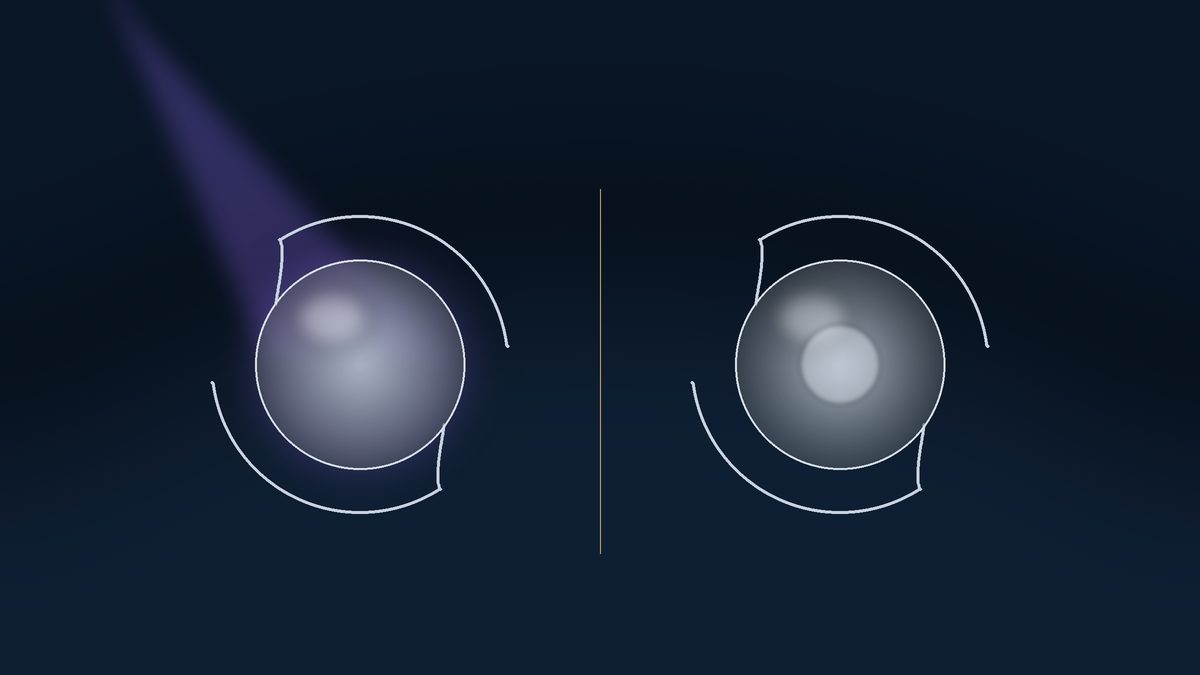
If you want an extended depth of focus lens because you don't want a lot of glare with nighttime vision, the Vivity and the Light Adjustable Lens Plus are the two I talk about most. In my patients they end up in a similar place at night. The difference is what happens when the lens power lands a little off, which happens in roughly 15% of fixed-power lenses in my hands, and whether you are willing to do the extra visits and pay the extra cost to be able to fix that.
| Light Adjustable Lens Plus (LAL+) | Clareon Vivity | |
|---|---|---|
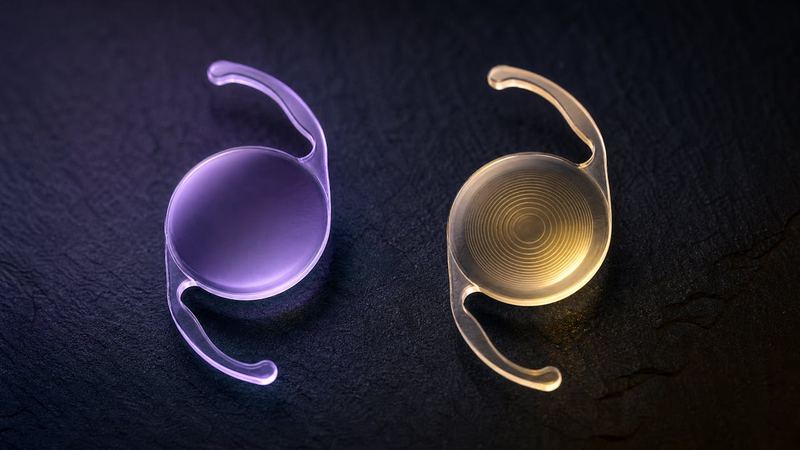
| Maker, design | RxSight; the lens power is adjusted with UV light in the office after surgery, then locked in; smooth surface with a slight built-in depth of focus | Alcon; non-diffractive extended depth of focus lens; fixed power, meaning it cannot change once it is in |
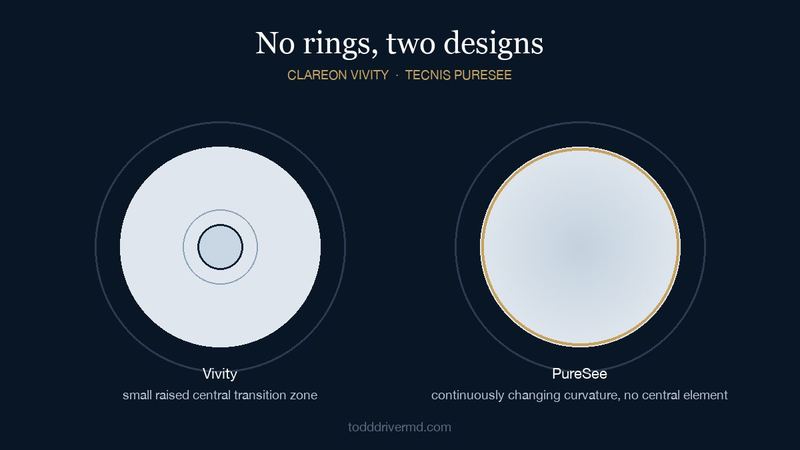
| How the range is made | Slight built-in depth of focus, then blended vision tuned during the adjustments | A small raised zone in the center stretches one point of focus into a longer one |
| Near vision, one eye against one eye | A little less than an on-target Vivity | If it lands exactly on target, probably a little bit better near vision, because there's a little bit larger range of focus |
| Near vision, both eyes together | In my patients, generally works better, because you can adjust it to exactly what you want | Depends on where both eyes land |
| Hitting the target | Around 95% in my experience after adjustment; 92% for the original LAL within half a diopter in the FDA trial and 93.5% for the LAL+ in a 150-patient registry | Roughly 85% in my experience; 88% within half a diopter in a 25-patient Clareon Vivity series; 83% for the standard single-focus lenses, not the Vivity, that were the comparison group in the LAL's FDA trial |
| If it lands off target | We adjust it, and if needed we adjust it again | A laser touch-up on the cornea, usually one, and not every eye is eligible |
| Visits | About five extra visits in my practice: up to three adjustments, then two lock-ins a week apart | The usual cataract follow-ups |
| UV-protective glasses | About two to three months | None |
| Night vision in my patients | Relatively similar to the Vivity | Relatively similar to the LAL+ |
| Eyes I won't put it in | Pupils that don't dilate well; patients on medications that would prevent them from getting an LAL+ | Macular pathology or glaucoma, same as the PureSee |
| Cost | Costs more than the Vivity in my practice | Costs less than the LAL+ in my practice |
| When I put it in | My first choice when the eye qualifies and the patient can do the visits | When the patient doesn't want the visits or the cost, or isn't an LAL+ candidate |
The patients who were deciding between these two
I've had a few patients who wanted the extended depth of focus lens because they didn't want to have a lot of glare with nighttime vision, which can happen with the trifocal lenses. They were debating between the Vivity and the Light Adjustable Lens. Some of them went with the Vivity because they didn't want to have to come in for the extra visits with the Light Adjustable Lens. Most of them are totally happy with the Vivity lens.
On the night vision itself, in my experience, I feel like LAL+ patients and Vivity patients perform relatively similarly at nighttime. So if glare at night is your main worry, both lenses do about the same, and the comparison you want is probably the adjustable lens against a trifocal: LAL vs PanOptix Pro.
The visits are the real cost of the LAL+, and they are why some patients choose the Vivity. In my practice that is about five extra visits: adjustments start about four weeks after the second eye's surgery, you get up to three adjustments and most of my patients need one or two, and then two lock-in treatments a week apart make the result permanent. The UV-protective glasses stay on for about two to three months, because sunlight can change the lens power before it is locked in. The whole schedule is in how many LAL adjustments you get and the UV glasses, explained.
The patient whose Vivity landed a little off
There are a few patients who, after their first Vivity lens, had the lens a little bit off of the target that they ideally wanted in terms of postoperative refraction, the glasses prescription the eye ends up with. One of them was seeing 20/30 at distance and 20/20 at near. They were a little sad about their distance vision. They wanted to be a little bit better, but they were very happy with their near vision. What I did was I did an LAL on the other eye, just to ensure that they could get exactly what they wanted, and honestly, they were very happy with the Light Adjustable Lens because we were able to fine-tune it afterwards.
Why a Vivity can land off target when we measured your eye
I tell my patients that with the Vivity and the more traditional lenses, what we do is we use the measurements of your eyes and plug them into formulas to predict what lens power is the best fit for your eye. The problem with this is that even though the formulas are very good, they're just predictions of where the lens will end up in terms of how well you'll be seeing after surgery. Despite our best efforts, even with using modern IOL formulas and things like ORA, intraoperative aberrometry that re-measures the eye during surgery, roughly around 85% end up right on target, and the other 15% are a little bit off target.
It is like ordering pants hemmed to a measured inseam. The measurement is careful, and most of the time the hem is right. Some of the time they come back a little long or a little short.
In the trial that supported the Light Adjustable Lens approval, 83% of the eyes that got a standard single-focus lens finished within half a diopter of target, which is two steps on a glasses prescription (FDA P160055). Those were not Vivity lenses. The one published Clareon Vivity series I know of that reports this is small, 25 patients, and found 88% of distance-targeted eyes within half a diopter (Kuo and Prasertsit, Clinical Ophthalmology 2025).
With the LAL, we use the same formulas to choose the lens, but then, if after the surgery the lens is a little bit not where you want it to be on target, we can actually adjust it. That brings the accuracy of the LAL to around 95% in my experience. In print the figures are a little lower than mine: 92% within half a diopter in the FDA trial, and 91.1% for the original LAL and 93.5% for the LAL+ in a 150-patient registry, 100 of whom got the LAL+ (Doane et al., J Cataract Refract Surg 2025). In the FDA trial the LAL eyes were also about twice as likely to see 20/20 without glasses as the single-focus eyes, 70% against 36%.
"Why not just get a laser touch-up?"
You could get a laser touch-up, but the problem with the laser touch-up is that then you have to run the risk of dealing with the side effects of the laser. The laser can make your eye a little bit drier. There's a little bit of healing time involved with it, and I find that the LAL adjustments are much cleaner compared to the laser touch-up.
Also, typically you only get one laser touch-up, and then that's it. With the LAL, we do one adjustment, and if things end up not quite the way you want them, you can adjust it again, whereas with a laser touch-up, you probably shouldn't do more than one. And not all eyes are eligible for a laser touch-up. Their corneas might be too thin. They might not be strong enough to deal with a laser procedure. The FDA's LASIK risk page lists both: some patients develop dry eye, and additional treatment may not be possible (FDA, LASIK risks).
The LAL has its own list, and I tell every patient the two disadvantages up front: the extra visits, and two to three months in the UV-protective glasses. Both are in is the Light Adjustable Lens worth it.
Near vision: one eye against one eye, and both eyes together
I would say, if you're just comparing one eye LAL+ to one eye Vivity, and the Vivity is exactly on target, the Vivity probably has a little bit better near vision, because there's a little bit larger range of focus compared to the LAL+. However, when both eyes are working together, I find that the LAL+ in both eyes produces a better result, because you can really just adjust it to exactly what you want: usually one eye set for distance and the other a little nearer, and both of them adjusted after surgery to where they actually landed. With the Vivity, where it lands is a prediction, and roughly one in seven lands a little off.
The registry numbers for the LAL+ on its own, with both eyes open after the adjustments, were 89% of patients seeing 20/20 or better at distance, 86% at arm's length, and 49% at reading distance (Doane 2025). Those are LAL+ results on their own, not a comparison, and 20/20 at reading distance is a strict bar; most patients read comfortably well short of it. How the two eyes are set with the LAL is in the Light Adjustable Lens and near vision.
Who should get the Vivity, and who should get the LAL+
I generally say the Vivity is a good choice for patients if they don't want to deal with the adjustments of the LAL+, don't want to deal with the extra cost of the LAL+, or are not a good candidate for the LAL+, such as having poor pupil dilation or being on medications that would prevent them from getting an LAL+. The medication list is on the lens's label: drugs that make the body more sensitive to UV light, tetracycline antibiotics among them, and drugs considered toxic to the retina (FDA P160055).
I wouldn't put the Vivity in anyone who has macular pathology or glaucoma. The Vivity is the same as the PureSee here. Alcon's own label says most patients with the Vivity are likely to experience some loss of contrast sensitivity compared with a single-focus lens (Alcon, Clareon Vivity), and an eye with macular degeneration or glaucoma already has reduced contrast; I go through that label language in Vivity vs PureSee. The full list of reasons I steer someone away from a multifocal or EDOF lens is in who should not get a multifocal or EDOF lens.
But in my opinion, I still feel like the LAL+, if you're willing to go through the adjustments and are okay with the extra expenses, is my first choice and the lens I would use. For my mother, I would say choose the LAL+, just based off of my experience with all the patients.
So, here's the bottom line, and it is what I tell my patients. If you can do the visits and you are okay with the extra cost, get the LAL+, because when it lands a little off we can adjust it, more than once if needed. If you can't do the visits, don't want the cost, or your pupils or your medications rule the LAL+ out, the Vivity is a good lens and most of my Vivity patients are totally happy with it. If you are not sure you want an extended depth of focus lens at all, start with the lens quiz or call my office.
Common questions
Is the Light Adjustable Lens better than the Vivity?
If you compare one eye to one eye and the Vivity lands exactly on target, the Vivity probably has a little bit better near vision. When both eyes are working together, I find that the LAL+ in both eyes produces a better result, because you can adjust it to exactly what you want. No published study has compared the two lenses head to head.
What is the difference between the LAL+ and the Vivity?
The Vivity is a fixed-power extended depth of focus lens: once it is in, its power cannot change. The Light Adjustable Lens Plus has a slight built-in depth of focus, and its power is adjusted with UV light in the office after surgery, then locked in. Both use the same formulas to pick the power, but only the LAL+ can be adjusted after surgery.
How often does the Vivity land off target?
In my experience, roughly 85% of fixed-power lenses end up right on target and about 15% are a little bit off. A 25-patient Clareon Vivity series found 88% of distance-targeted eyes within half a diopter, and in the Light Adjustable Lens FDA trial 83% of the standard single-focus comparison eyes finished within half a diopter, against 92% of the adjustable eyes.
Does the Vivity or the LAL+ have less glare at night?
In my experience, I feel like LAL+ patients and Vivity patients perform relatively similarly at nighttime. Both are in a different category from the trifocal lenses on halos and glare, which is usually why a patient is choosing between these two in the first place.
Can I just get a laser touch-up if my Vivity lands off target?
Often, yes, but the laser can make your eye a little bit drier, there is healing time, and typically you only get one laser touch-up. Not all eyes are eligible, because the cornea might be too thin. With the LAL+, if one adjustment leaves things not quite where you want them, we can adjust it again.
Who should choose the Vivity over the LAL+?
Patients who don't want to deal with the adjustments, don't want to deal with the extra cost, or are not good candidates for the LAL+, such as having poor pupil dilation or being on medications that would prevent them from getting it. I wouldn't put the Vivity in anyone who has macular pathology or glaucoma.
Disclosure: I have no financial relationship with Alcon or RxSight. I use both companies' lenses in my practice and have no financial interest in either.
Sources: FDA premarket approval P160055, Light Adjustable Lens summary of safety and effectiveness · Doane et al., J Cataract Refract Surg 2025, clinical data registry comparing two light adjustable lenses · Kuo and Prasertsit, Clin Ophthalmol 2025, bilateral Clareon Vivity with mini-monovision · FDA, LASIK: what are the risks · Alcon, Clareon Vivity professional page
Related reading: LAL vs PanOptix Pro · Vivity vs PureSee · LAL vs LAL+ · is the Light Adjustable Lens worth it · comparing premium cataract lenses · who should not get a multifocal or EDOF lens · or take the lens quiz.
Deciding between these two lenses for your own eyes?
That is what a consultation is for. Bring your questions and we'll go through your measurements, your pupils and your medication list together at OC Eye Associates, Irvine.
Call (949) 653-9500Read next

This article is for educational purposes and is not a substitute for a medical examination or personalized medical advice. Lens choice depends on your eye measurements, your eye health, and how you spend your day; discuss it with your own surgeon.