Light Adjustable Lens UV Glasses: How Long, When, and What If You Forget
Published August 5, 2026 · Updated September 30, 2026 · Medically reviewed by Todd Driver, MD
Quick answer: After Light Adjustable Lens surgery, you wear UV-protective glasses until your lock-in treatments are complete, typically two to three months. Newer LAL lenses have ActivShield, a built-in UV barrier, so an occasional lapse is not the emergency it once was. The times that matter most are outdoors and in bright rooms.
Why the glasses exist at all
The LAL is made of a material that changes shape when exposed to a specific wavelength of UV light. That's the whole point of the lens: it's how we adjust your prescription after surgery. But until the lens is locked in, UV light from the world, mostly sunlight, could in theory cause unintended changes. The glasses block that.
How long you'll wear them
Most of my Light Adjustable Lens patients wear the UV-protective glasses for about two to three months, from surgery day until the day after the second lock-in treatment. In my practice the timeline looks like this, and it matches the schedule on my Light Adjustable Lens page for Irvine patients. We do cataract surgery and implant the LAL on the first eye, then do the second eye about two weeks later. Four weeks after the second eye, we start adjustments. You get up to three, and most of my patients need one or two. Then two lock-in treatments, one week apart, each a separate appointment. The second lock-in uses up the last of the light-sensitive material, so the lens can no longer change shape. Even so, you keep the glasses on for a full 24 hours after that final treatment, per RxSight's instructions, and then they come off for good. Start to finish, most patients wear them for roughly two to three months.
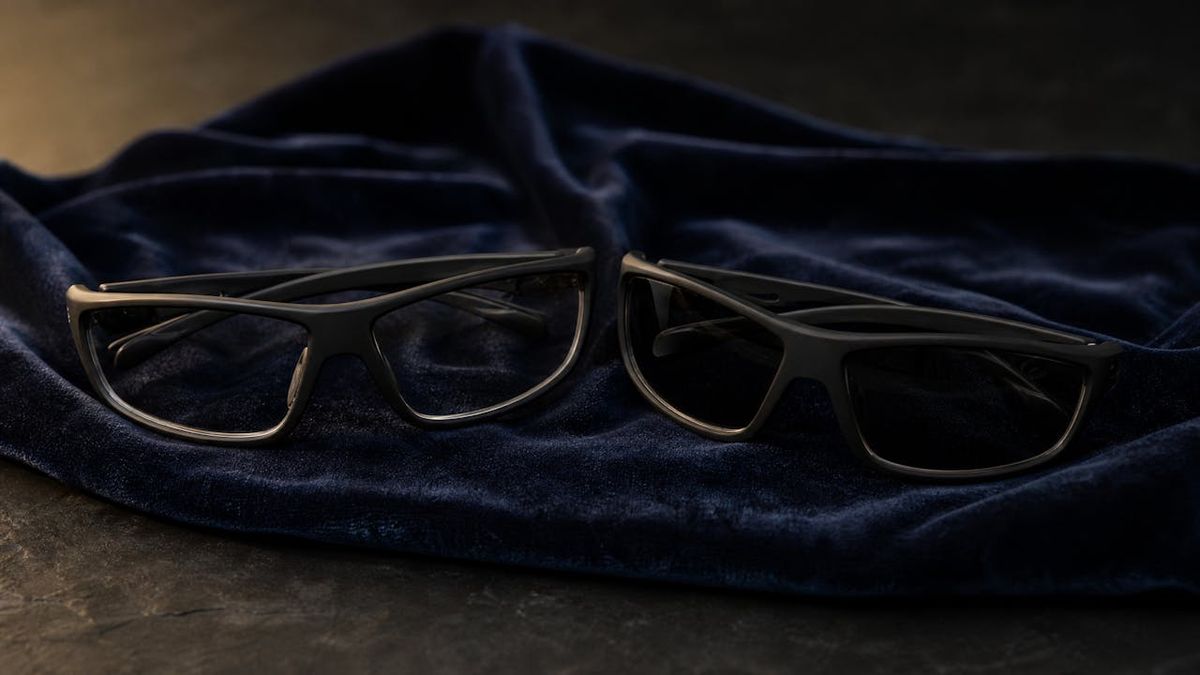
You get three pairs: one dark, one clear, and one clear pair with a little bit of a bifocal at the bottom, so you're not stuck wearing sunglasses indoors for two months.
What ActivShield changed
The current generation of the LAL has a built-in UV protection layer called ActivShield. Practically speaking, the lens is designed so the adjustment machine's specific wavelength does the reshaping. That's a real change from the first-generation lens, where the glasses were carrying the entire protective load.
Officially, you should still wear the glasses as directed, and that's what I tell my patients too. But it changes the spirit of the instruction. I frame it this way: wear them as much as you can, and make absolutely sure you have them on outdoors and in very bright rooms, because that's when your eyes benefit from the extra protection. Indoors in normal lighting, in my experience the stakes are lower than the old warnings suggest.
What if you forget?
This is the question everyone actually wants answered. If you have the current lens with ActivShield and you forget the glasses for a stretch, in my experience an occasional lapse typically is not a disaster. The shield gives you a margin the original lens didn't have. Tell your surgeon it happened, and get back to wearing them.
I'm still extra cautious with my own patients, and I'd rather you treat the glasses as the rule and the shield as the backup, not the other way around. No other lens can be adjusted after it's in your eye; a couple of months of glasses is a small price for protecting that.
Sources: FDA premarket approval P160055, UV precautions and device background · Doane et al., clinical data registry of two light adjustable lenses (J Cataract Refract Surg 2025)
Related reading: The Light Adjustable Lens, explained · What lock-in is · How many adjustments you get · LAL vs LAL+: what changed · or ask about the Light Adjustable Lens in Irvine.
Two tools that may help you think this through: the 60-second lens quiz, and the vision simulator, which shows how each lens sees by day and at night.
Curious whether you're an LAL candidate?
It takes one consultation to find out. OC Eye Associates, Irvine.
Call (949) 653-9500Read next

This article is for educational purposes and is not a substitute for a medical examination or personalized medical advice. Timelines describe my own practice and can differ between surgeons.