Interactive Tool · 60 Seconds
Which Cataract Lens Fits Your Life?
Answer a few quick questions about how you use your vision. You'll get a personalized starting point for your consultation, plus a link to see your recommended lens in action in the vision simulator.
Question 1 of up to 6
After cataract surgery, which sounds more like you?
Your best starting point
Your recommended starting point
See It in the Simulator Call (949) 653-9500Also worth discussing
A second option worth discussing
New to all of this? Start here. Wondering what the visit itself is like? Your first visit, explained.
Bring these to your consultation
The five questions I wish every patient asked at the pre-op visit.
This quiz is an educational starting point, not a medical recommendation. The right lens also depends on the health of your cornea, retina, and ocular surface, your measurements, and a conversation about your goals. Dr. Driver will confirm which options your eyes qualify for at your consultation.
Todd Driver, MD · OC Eye Associates · 9 Corporate Park, Suite 150, Irvine, CA 92606 · (949) 653-9500 · todddrivermd.com/cataract-lens-quiz/
The five lens options, in plain English
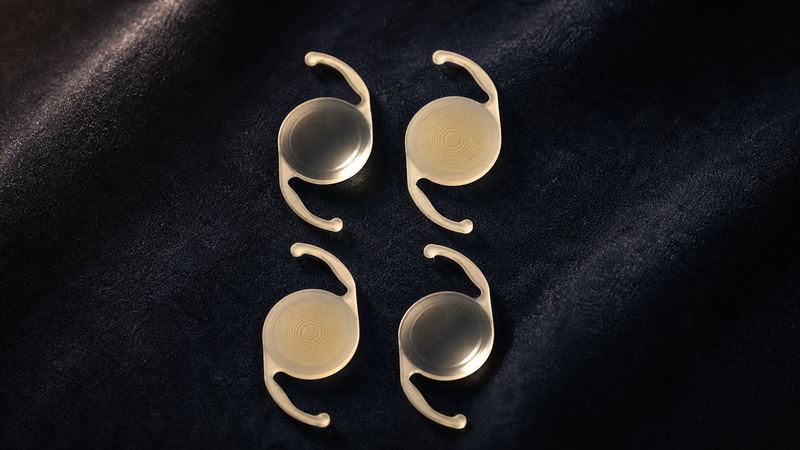
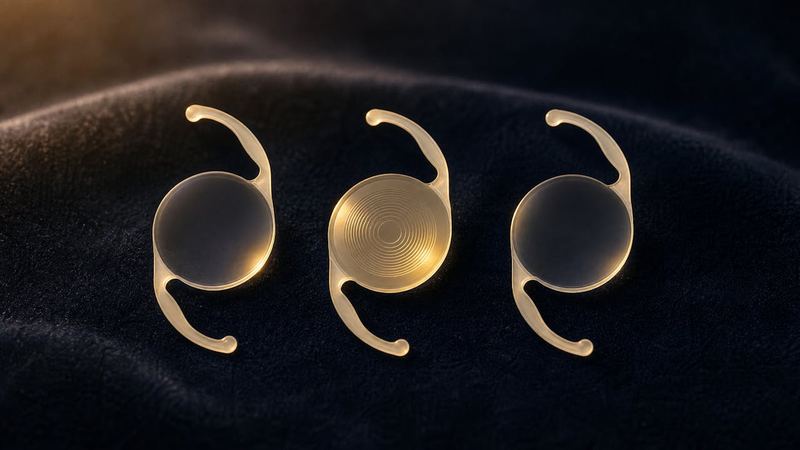
Standard lens (covered by insurance): a really good lens that gives sharp vision at one distance. You wear reading glasses for up close, and if you have a lot of astigmatism it only partially corrects your vision.
Toric lens: the lens that treats astigmatism. It gives you sharper vision when you're not wearing glasses; you still wear readers for up close.
Multifocal (trifocal) lens: vision at far, intermediate, and near, the best choice for glasses-free close-up vision. The trade-off is very faint halos around lights at night from the rings that create the range of focus, usually much less than the glare from the cataract itself.
Extended depth of focus (EDOF) lens: no rings, so less glare and halo at night. Near vision isn't quite as good as a trifocal, so you might need bigger print up close or readers for small print.
Light Adjustable Lens: vision at far and close, and the only lens that can be adjusted after surgery to fine-tune your prescription once the eye has healed. The most customizable option; you may still use readers for really small print.
How to choose
Start with how you feel about glasses. If you don't mind them, a standard or toric lens keeps things simple. If you want freedom from glasses, the question becomes near vision versus night vision: patients who want the strongest close-up vision choose a multifocal and accept faint night halos, while patients who prioritize clean night vision choose an EDOF or the Light Adjustable Lens and keep readers for fine print. Patients who want the most customizable result, including those who had LASIK, tend to choose the Light Adjustable Lens. Your eye's health and measurements determine which options you qualify for, which is what a consultation confirms.
Read next
Bring your result to a consultation
Your quiz answer is a conversation starter. A full evaluation at OC Eye Associates in Irvine tells us which lenses your eyes qualify for.
Call (949) 653-9500 Prefer we call you? Request a callback OC Eye Associates · 9 Corporate Park, Suite 150, Irvine, CA 92606 · Get directions