Cataract Lens Options Explained: Your Unbiased Guide to All Four Choices
Published January 14, 2026 · Updated August 20, 2026 · Medically reviewed by Todd Driver, MD
Quick answer: There are four main lens choices in cataract surgery: monofocal, toric, multifocal or EDOF, and the Light Adjustable Lens. There is no perfect lens. Each trades something for something else, and the right pick depends on your astigmatism, your eye health, and how much you want to be out of glasses.
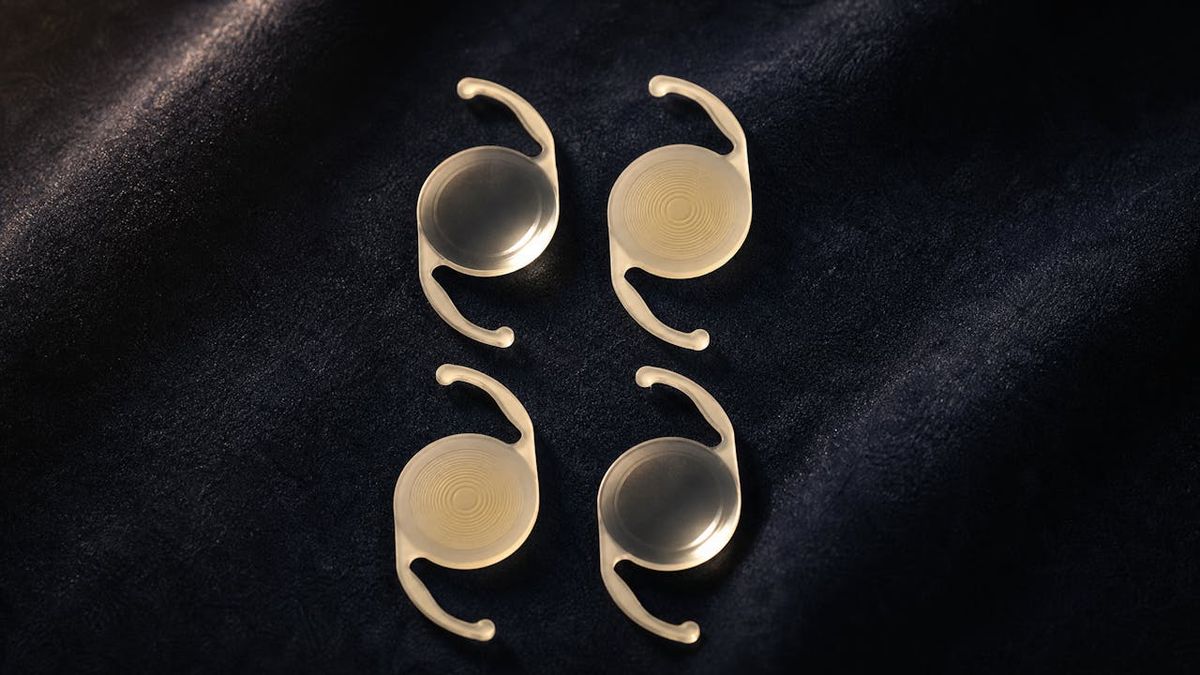
If you're facing cataract surgery, you're also facing a dizzying choice: which lens is right for you? Your doctor may have thrown around terms like monofocal, toric, EDOF, or light adjustable. This decision matters, because the lens replaces your eye's natural lens permanently, and it will shape how you see everything afterward.
Let me tell you upfront: there is no such thing as the perfect lens. Every option involves trade-offs, and if the lens doesn't match your priorities, you may not be fully satisfied with your vision after surgery. My goal here is to be your unbiased guide through the four main categories.
The basic monofocal lens
A fantastic lens that gives you sharp, clear vision at one set distance. We typically correct for distance vision, the kind you use to drive and watch TV. Two limitations to understand. First, it focuses at only one distance, so if we correct for distance, you'll need reading glasses for phones, books, and menus. Second, it does not correct astigmatism, the condition where your eye is shaped more like a football than a golf ball. If you have significant astigmatism, this lens gives only partial correction and you may need glasses for both distance and near.
If you're okay with wearing glasses, this lens is a great choice, and it's the one insurance covers.
The toric monofocal lens
This solves the astigmatism problem. A toric lens is shaped to cancel out the football shape of your eye, and for the right patient it's a game changer: much sharper glasses-free vision at your chosen distance. But like all monofocals, it still focuses at one distance, so reading glasses remain for close work. This is the lens for someone who wants their astigmatism corrected and the sharpest possible uncorrected distance vision, and doesn't mind readers.
Multifocal and EDOF lenses
If your goal is reducing dependence on reading glasses, this is where multifocal and extended-depth-of-focus (EDOF) lenses come in. Multifocals split light into different focal points; EDOF lenses stretch the focus range to improve intermediate vision. The result: reading, phone use, and distance vision with far less reliance on glasses.
The trade-offs matter. If you have conditions like macular degeneration or advanced glaucoma, these lenses are usually a poor fit and can actually reduce visual quality. And there are visual side effects: some patients notice halos or rings around lights at night, especially early on. That tends to improve over a few months and is typically less bothersome than cataract-related glare, but the experience varies. If night driving is your top priority and you're sensitive to glare, this may not be your best option.
In my experience, the multifocal gives better near vision with slightly more glare, while the EDOF has less glare but compromises a bit up close.
The Light Adjustable Lens
The most customizable option we have today. What makes it different: after the lens is implanted, we wait about four weeks after your second eye for your vision to stabilize, then fine-tune the lens using controlled UV light to physically reshape it inside your eye. Small residual prescriptions that would normally require glasses can simply be dialed out. Once you're happy, the lens is permanently locked in.
Three considerations: it requires extra post-operative visits for adjustments, it's usually the most expensive option, and it isn't suitable for everyone, including patients on certain UV-sensitizing medications or with specific eye conditions.
Which cataract lens should you choose?
There is no perfect cataract lens, but there is almost always a lens that fits your priorities very well:
- Simplicity, fine with glasses: a monofocal is an excellent choice.
- Astigmatism: toric lenses are great.
- Less reliance on glasses, okay with some glare: multifocal or EDOF lenses are worth considering.
- Maximum precision and customization: the Light Adjustable Lens is the only one we can adjust after surgery.
Your next step is a thoughtful discussion with your surgeon about which trade-offs match your lifestyle and your eyes. Here is what cataract surgery in Irvine looks like with me.
Related reading: PureSee vs Eyhance · the Light Adjustable Lens explained · the Light Adjustable Lens at our Irvine practice · who should not get a multifocal lens · how surgeons choose your lens · or call to arrange a cataract consultation in Irvine.
Two interactive tools can help you compare your options: take the 60-second lens quiz or see each lens in the vision simulator, day and night.
Which lens fits your life?
That's exactly what we work out together at a consultation at OC Eye Associates in Irvine.
Call (949) 653-9500Read next
This article is for educational purposes and is not a substitute for a medical examination or personalized medical advice.