Interactive Tool · Cataract Lens Options
How Will You See With Each Lens? Compare for Yourself.
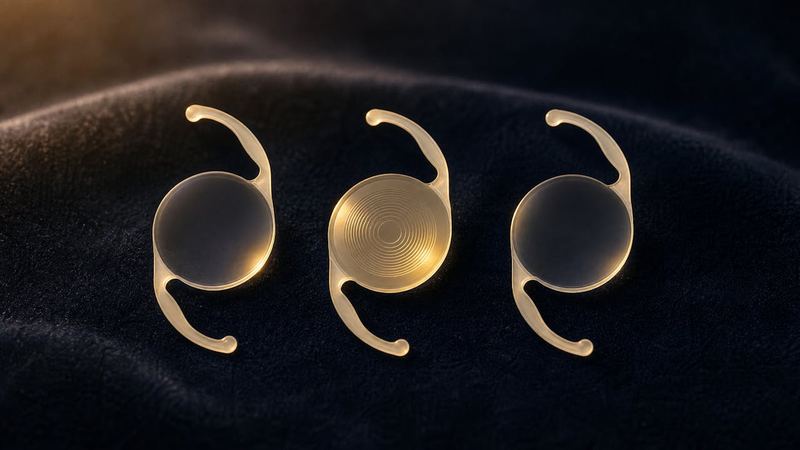
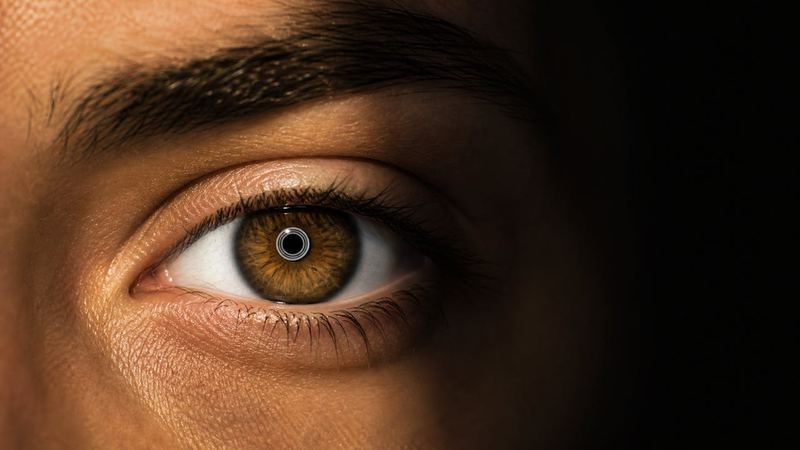
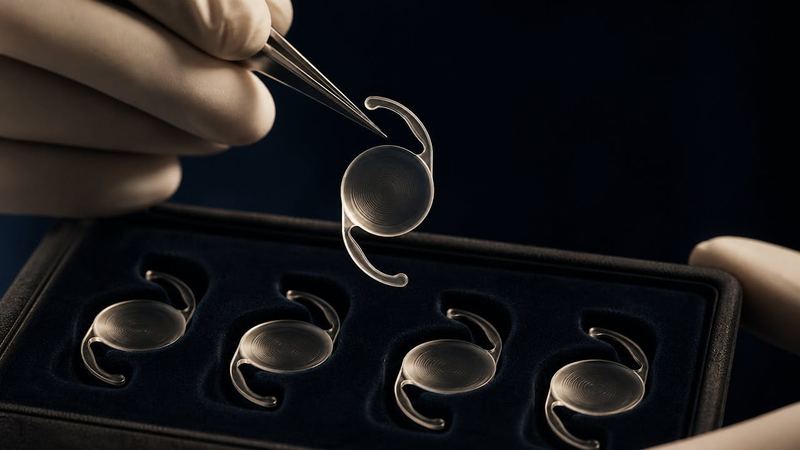
During cataract surgery, your cloudy natural lens is replaced with an artificial lens implant (IOL). Different lens types trade off distance, computer, and reading vision, and they behave differently around lights at night. Select a lens below and switch between daytime and night driving to compare. The simulations reflect published clinical data on today's lenses.
Educational approximation, not a prediction of your own vision. Scenes assume a lens set for distance in a healthy eye. The Light Adjustable Lens scene instead shows the blended setting most patients choose. Results vary with pupil size, eye health, and healing. Read the full note.
Standard Monofocal: crisp distance, glasses for near
Focuses light at one distance. Far away is sharp, the computer is slightly soft, and reading a phone requires glasses. At night, lights stay clean with only a faint natural glow.
Best for: patients who don’t mind reading glasses. Usually covered by insurance. Does not correct astigmatism.
What each lens trades off
| Lens type | Distance | Computer (~2 ft) | Reading (~14 in) | Night halos | Astigmatism | Adjustable after surgery? |
|---|---|---|---|---|---|---|
| Standard monofocal | Sharp | Blurry | Blurry, readers needed | None, the cleanest night vision | Not corrected | No |
| Toric monofocal | Sharp | Blurry | Blurry, readers needed | None | Corrected | No |
| Trifocal | Sharp | Sharp | Sharp | Concentric rings around lights at night, most noticeable in the first months | Toric versions available | No |
| Extended depth of focus (EDOF, non-diffractive) | Sharp | Sharp | Functional, readers for fine print | Slightly more glow than a monofocal, no rings | Toric versions available | No |
| Light Adjustable Lens (LAL+) | Sharp | Sharp | Functional in the blended setting | Clean, matches a monofocal | Corrected during adjustment | Yes, the only one |
Scroll the table sideways to see every column.
A standard monofocal lens gives crisp distance vision and the cleanest night vision, with reading glasses for near. A toric monofocal adds astigmatism correction. A trifocal is sharp at distance, computer, and reading range, with concentric rings around lights at night, most noticeable in the first months. A non-diffractive extended depth of focus (EDOF) lens, the type this simulator shows, is sharp at distance and computer range, with night vision close to a monofocal and readers for fine print. The Light Adjustable Lens is fine-tuned after surgery and, in the blended setting most patients choose, covers distance through phone range with clean night vision.
Read next
This simulator is an educational approximation based on published clinical and optical bench data for current-generation lens implants. Individual results vary with pupil size, eye health, and healing. It is not a guarantee of your visual outcome. Dr. Driver will help you choose the lens that fits your eyes and lifestyle. This page is for education and is not a substitute for a medical evaluation. The halo sizes in the monofocal, EDOF and trifocal night scenes follow a published optical-bench study (Kohnen, Nouri and Carson, Translational Vision Science & Technology, 2023). In simulated headlight testing, non-diffractive presbyopia-correcting lenses produced smaller, less intense halos than diffractive ones, and monofocals produced the least. The authors note that how well bench halos predict what patients see has not been established. The EDOF scene represents non-diffractive designs. The Light Adjustable Lens scene shows blended vision rather than a single distance target.
Not sure which lens fits your life?
That is exactly what a consultation is for. Bring your questions, and we will match the technology to how you use your vision.
Call (949) 653-9500 Prefer we call you? Request a callback OC Eye Associates · 9 Corporate Park, Suite 150, Irvine, CA 92606 · Get directions