LAL vs LAL+: Is the Newer Light Adjustable Lens Better?
Published August 20, 2026 · Updated September 22, 2026 · Medically reviewed by Todd Driver, MD
Quick answer: The LAL+ is the same Light Adjustable Lens with one design change: a modified front surface that slightly extends your depth of focus before any light treatments even begin. In the one published head-to-head comparison, accuracy and distance vision were essentially the same, near and intermediate vision were better with the LAL+, and no extra loss of contrast was measured. In my practice, nearly every patient who chooses an adjustable lens today gets the LAL+.
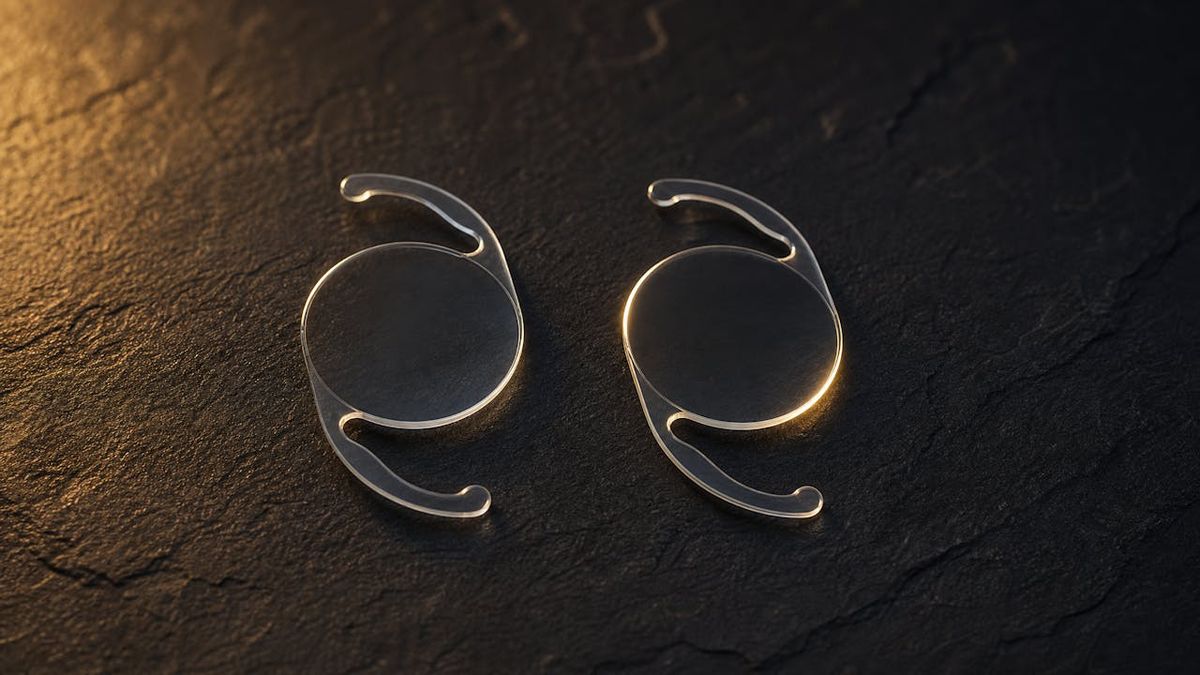
Patients ask me some version of this every week: "Doc, which one would I be getting, the LAL or the LAL+? And is the plus actually better?" So let me sort it out: what changed, what stayed the same, and which one I use in my own operating room.
Two lenses, one platform
Almost everything about the two lenses is identical. Both are made by RxSight on the same FDA-approved platform, and both are silicone lenses whose power we can change after surgery with a series of painless UV light treatments, once your eye has healed and we can measure your real prescription rather than predict it. Each carries ActivShield, a built-in UV barrier that protects the lens between office visits. The routine doesn't change either: surgery on each eye, a healing period, adjustments, then two lock-in treatments that make the result permanent, with the same UV-protective glasses along the way.
If you want the full walkthrough of that process, I've written about how many adjustments patients typically need, what lock-in actually is, and the UV glasses, explained. Nothing about the LAL+ changes any of it.
The one thing that changed
On the LAL+, the middle of the lens is very slightly stronger than the edge, and the change is smooth rather than stepped: a small, continuous increase in power toward the center of the lens. It's kind of like progressive glasses compared to old bifocals with a visible line. That smooth power gradient stretches your depth of focus, so instead of one crisp focal point with everything else falling off quickly, you get a somewhat wider zone of useful vision. It mostly helps at intermediate and near: the dashboard, the computer screen, the price tag at arm's length.
Is that the same thing as a multifocal? No. A diffractive multifocal splits light with ring-shaped zones, and those rings are the design most associated with halos around headlights at night. The LAL+ has no rings. It starts you with a slightly wider range, and then the light treatments personalize the result, the same as the original lens.
What the head-to-head comparison actually found
There is exactly one peer-reviewed study directly comparing the two lenses: 150 patients, 50 with the LAL and 100 with the LAL+ in both eyes, published in the Journal of Cataract and Refractive Surgery in 2025. Before the numbers, you should know who paid for them: the study was sponsored by RxSight, the authors consult for the company, and patients weren't randomized. It's still the best comparative data we have.
On accuracy, the two were a wash: 93.5% of LAL+ eyes landed within half a diopter of their target, meaning within half a step of a glasses prescription, versus 91.1% of LAL eyes.
At distance, the original lens had a small edge, about three points: 92% of LAL patients versus 89% of LAL+ patients saw 20/20 or better with both eyes open and no glasses. On best-corrected testing the LAL+ gave up an average of one letter on the eye chart, which is almost nothing.
Up close, the edge flipped and got a little bigger, about seven points: 93% of LAL+ patients could read J1, roughly newspaper fine print, at their preferred distance, versus 86% with the original lens. The intermediate numbers followed the same pattern.
The trade-off you'd expect didn't show up. Extending depth of focus usually costs some contrast, so the researchers checked reading performance at four contrast levels, from bold black print down to faint gray. At every level, the LAL+ group matched or beat the original-lens group. The LAL+ group also ended up with their two eyes closer together in final prescription, which tends to make blended vision, where one eye favors distance and the other favors near, more comfortable.
Why do nearly all my patients get the LAL+ instead of the LAL?
In my practice, the answer to "which version would I get?" is almost always the LAL+. What I tell my patients is that the plus is a head start, not a different lens. It keeps everything I value about the adjustable platform. It adds a real improvement at near and intermediate. And in the published comparison it gave up almost nothing at distance and nothing in contrast. My own patients' results have been consistent with that, and nothing published rules the plus out for anyone who's a candidate for the platform in the first place.
The comparison is one industry-sponsored registry of 150 patients, not a large independent trial, and a published letter about the study pointed out that it measured contrast on an eye chart rather than formally asking patients about glare and halos at night. The seven-year follow-up data that exists for light-adjustable lenses also comes from an earlier generation of the lens, so the LAL+ doesn't have long-term published data yet. Neither of those facts changes my practice, but a surgeon who quotes you only the flattering numbers isn't giving you the whole picture.
The candidacy questions that matter are about the platform, not the version. The adjustable lens may not be the right fit if you take medications that increase UV sensitivity, have a history of herpes infections in the eye, or have pupils that don't dilate well enough for the light treatments. And if you can't commit to the follow-up visits, this isn't your lens. All of that applies to the LAL and the LAL+ equally, and it's exactly what a consultation sorts out.
The bottom line
Same lens, same adjustability, same visits, same UV glasses. The plus adds range at near and intermediate that, in the only published comparison, cost almost nothing at distance and nothing in contrast. That's why it's the version I reach for. If you're weighing this decision, the question worth bringing to your surgeon is the one I'd want asked of me: "Given my eyes, is there any reason to prefer one version over the other?" A surgeon who works with this platform regularly will have a ready answer.
Common questions
Is the LAL+ better than the original LAL?
It depends what you're measuring. In the published head-to-head registry, distance vision and accuracy were essentially the same, while near and intermediate vision were better with the LAL+ and no additional contrast loss was measured. The adjustability, which is the reason to choose this platform at all, is identical.
Does the LAL+ change the visits, the adjustments, or the UV glasses?
No. Same surgery, same healing period, same adjustment appointments, same two lock-ins, same UV-protective glasses during the adjustment window. The design change affects the optics of the lens, not the process.
Does the LAL+ cause halos like a multifocal lens?
The LAL+ is not a diffractive multifocal; its extended range comes from a smooth central power increase rather than the light-splitting rings most associated with halos. The honest limit: the head-to-head study measured contrast on an eye chart and did not formally survey patients about halos or night symptoms, so that specific question does not have direct published data yet. Night vision varies from person to person with any lens. If night driving matters to you, say so at your consultation before choosing any lens.
Is there long-term data on the LAL+?
Not yet. The LAL+ launched commercially in 2024, and the seven-year follow-up data that exists for light-adjustable lenses comes from an earlier generation of the lens. What we do know is that the platform, materials, and lock-in chemistry are shared across versions.
Sources: Doane et al., clinical data registry comparing outcomes of two light adjustable lenses (J Cataract Refract Surg 2025) · published comment on the registry's methods (J Cataract Refract Surg 2026) · RxSight LAL+ commercial launch announcement (April 2024) · FDA premarket approval P160055, summary of safety and effectiveness · Schojai et al., seven-year follow-up of an earlier-generation light adjustable lens (J Cataract Refract Surg 2020)
Related reading: Light Adjustable Lens vs Vivity · LAL vs PanOptix Pro · The Light Adjustable Lens, explained · How many adjustments you get · What lock-in is · LAL and near vision · or the Light Adjustable Lens in Irvine.
Two tools that may help you think this through: the 60-second lens quiz, and the vision simulator, which shows how each lens sees by day and at night.
Does the adjustable lens fit your eyes?
Hopefully this answers the version question and puts you more at ease. Whether the platform fits your eyes is the bigger question, and that one takes a consultation. OC Eye Associates, Irvine.
Call (949) 653-9500Read next

This article is for educational purposes and is not a substitute for a medical examination or personalized medical advice. Lens choice is always individualized at your own consultation, and practices differ between surgeons.