Nearsighted? Keep Your Near Vision After Cataract Surgery
Published October 27, 2026 · Medically reviewed by Todd Driver, MD
Quick answer
If you've been nearsighted your whole life, cataract surgery can give you better distance vision than you've ever had, but if both eyes are set for distance, you'll need reading glasses to see your phone and things up close. You can set both eyes for distance and use reading glasses, set both eyes for near and wear glasses for driving, do monovision with one eye for far and one eye for near, or choose a lens that gives you a range of focus. If you're thinking about monovision, the time between your first and second eye gives you a rough preview of it before you commit.
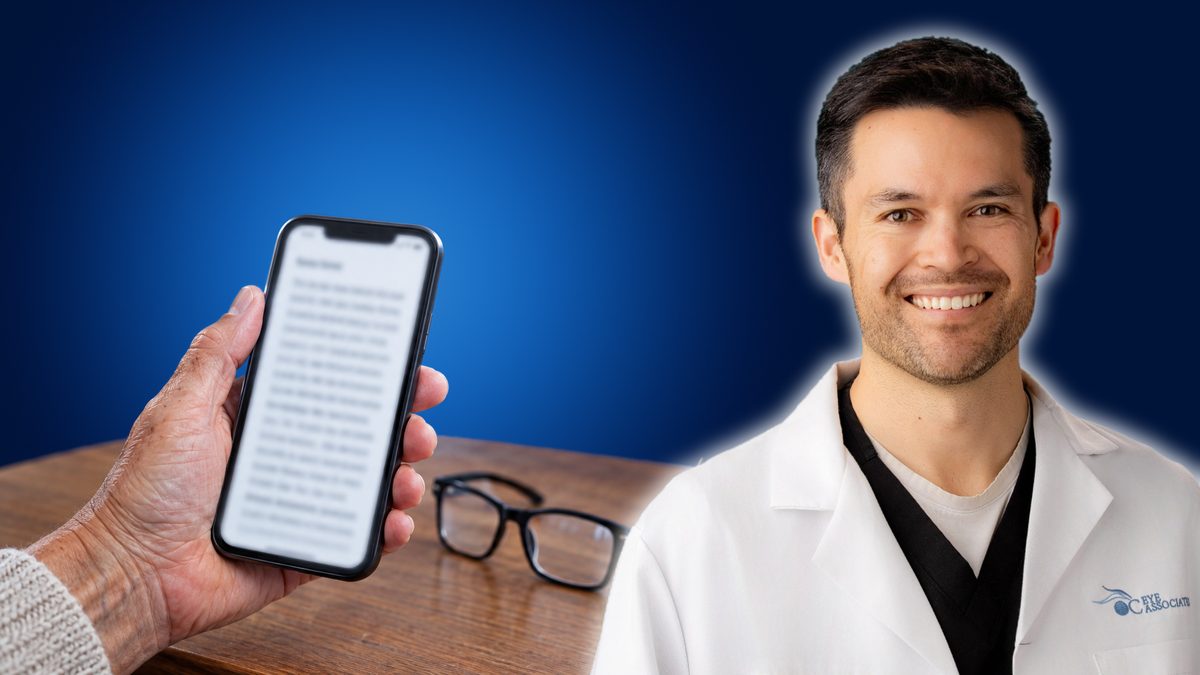
If you're nearsighted and both of your eyes are set for distance during cataract surgery, the near vision you've had your entire life goes away after surgery. A lot of my nearsighted patients don't realize that going in. We pick where the focus of your new lens goes before surgery, and I tell my nearsighted patients there are four ways this can go.
Why does cataract surgery take away near vision if I'm nearsighted?
If you're nearsighted, and we also call this myopia, your eyes are naturally set up to see things up close. You can read your phone, but you need glasses at all times to see things far away. Most people don't realize there's a benefit of being nearsighted because they've never known anything else.
When we do cataract surgery, we take out your cloudy lens and replace it with a clear artificial one, and that new lens gives you a new focus. It can't change focus the way a young eye can, so we have to pick where that focus goes before surgery. If we set the lens for distance in both eyes, the near vision you've had your entire life goes away after surgery.
What are my four options if I'm nearsighted?
| Far without glasses | Up close without glasses | The main catch | |
|---|---|---|---|
| Both eyes for distance | Yes | No, you wear reading glasses | Reading glasses for your phone and anything up close |
| Both eyes for near | No, you wear glasses for driving | Yes | About a month of poor distance vision before you can get new glasses |
| Monovision | Yes, with your distance eye | Yes, with your near eye, at about arm's length | Your brain adjusts to two different focuses |
| A lens with a range of focus | Yes | Yes, depending on the lens | Each lens has its own trade-offs, and not every eye is a candidate |
Both eyes set for distance
Your distance vision will be crystal clear, but you'll need to wear reading glasses to see your phone and things up close. I've had a few patients who chose this despite my best efforts to convince them to get a lens focused for near. They were thrilled with their distance vision after surgery, but they were really annoyed that they had to keep wearing reading glasses to see things up close, such as their cell phones.
Both eyes set for near
You'll be able to read without glasses, but for all distance things, such as driving, you'll need to wear glasses. The main catch with this one is that most surgeons, including me, wait about a month after cataract surgery before giving you a glasses prescription, because during that month of recovery your prescription can be changing. If we gave you a prescription one day after cataract surgery, it could be incorrect within a few weeks, and it would be a big waste of money. So if you do both eyes for near, you'll basically have a month of poor distance vision where you'll need someone to drive you around.
Monovision
This is one eye set for distance and the other eye for near. When I do monovision, I don't make a big difference in the focus between the two eyes. I set one eye for pure distance and the other eye for about an outstretched arm's length, so the difference between the distance eye and the near eye isn't very big, and your brain has a fairly easy time adjusting to the two different focuses. A lot of my nearsighted patients who want to keep their near vision end up choosing this option.
A lens with a range of focus
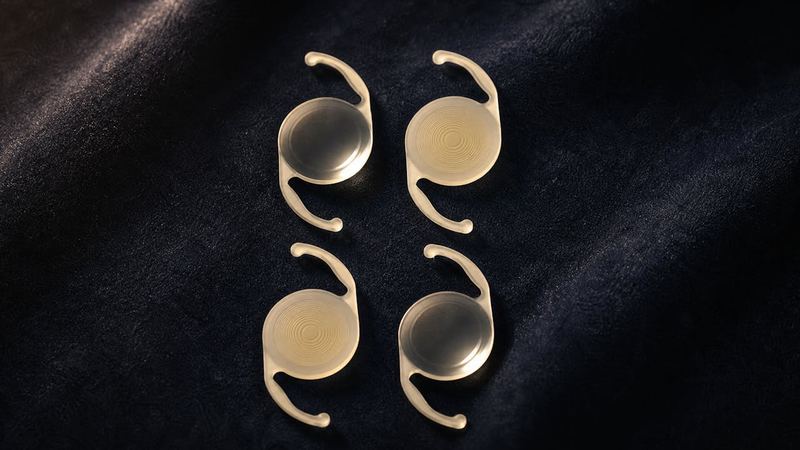
This could be an extended depth of focus lens, a trifocal lens, or a light adjustable lens that we fine-tune after surgery. All of these lenses come with their own trade-offs, which I go through in Trifocal vs EDOF vs Light Adjustable Lens. It can be a great option if you want both eyes seeing far and near, assuming your eye is a good candidate, because not every eye can get these lenses.
Do I talk every nearsighted patient out of distance in both eyes?
No. Most of my nearsighted patients who choose distance in both eyes go in knowing what the limitations are. But in some cases, despite me counseling them extensively and telling them they may miss their near vision, a small percentage come back wishing they had done monovision or a lens with a range of focus. One patient told me after her second cataract surgery, “Doc, my distance vision is amazing. I've always needed glasses to see far away, but I didn't realize how much I use my near vision until I lost it.” That's the group I'm trying to keep you out of.
Can I try monovision before I commit?
Yes. I typically do your dominant eye first and set it for distance, so if you're undecided, the time between your first and second eye gives you a rough preview of monovision. One eye has had surgery for distance and your other eye is still nearsighted, so you get to see what your brain does when one eye is for far and one eye is for near. It's only a preview, because your other eye is still at its full prescription, so the difference between your two eyes is bigger than what I'd plan for monovision.
If you're able to tolerate that, your experience with monovision will be way better after your second eye. Both eyes will have had cataract surgery, so the images will be more similar between the two eyes, and your brain will be able to use each image simultaneously to give you near and far vision.
Most people know right off the bat whether they're interested in monovision. For my patients who are really unsure, we can also do a contact lens trial, where they work with an optometrist and wear one contact for distance and one for near before anything is decided.
The other way to try monovision is the light adjustable lens. With that lens, we can actually give you monovision after surgery. You can see exactly what that's like, and if you don't like it, we change it back at the next adjustment appointment. The main caveat with that lens is that it comes with additional visits, and you have to wear UV-protective glasses during your recovery period until we're done adjusting your lens.
What do I do with my glasses between my first and second eye?
Let's say you're very nearsighted in both eyes, something like a minus 7 glasses prescription, and your first eye has been set for distance. Your other eye is still at your minus 7 prescription, so the two eyes are not working together at all at this point, and a lot of my patients worry about their eyes being very imbalanced during that time.
So what I do is have my patients bring in their glasses, and we pop the glasses lens out on the side of the eye that just had surgery. We keep the prescription in on the side of the eye that's still waiting for surgery. That way the eye that hasn't had surgery still gets its glasses prescription, and the eye that has had surgery can see through an empty frame.
By about the first or second day after surgery, most of my patients are seeing pretty clearly out of the eye that just had surgery, and they don't really need the glasses to get by in between the two eyes. People recover at different rates, but the eye that's had surgery eventually becomes so much stronger than the eye that hasn't that it takes over for most visual tasks until the second eye is done. In my office, the second eye is typically done two weeks after the first.
What should I ask at my cataract consult?
If you've been nearsighted your entire life, cataract surgery is going to give you better distance vision than you've ever had. The decision is what's going to happen to your near vision. So if you're nearsighted and you're headed to a cataract consult, the one question I want you to think about and ask is, “What's going to happen to my reading vision?” I just want you to be able to hear the answer before your surgery instead of after it.
Common questions
Will I lose my near vision after cataract surgery if I'm nearsighted?
If both eyes are set for distance, yes. The near vision you've had your entire life goes away after surgery, and you'll need reading glasses for your phone and things up close. Monovision or a lens that gives you a range of focus are the ways to keep it.
What is monovision after cataract surgery?
Monovision is one eye set for distance and the other eye set for near. When I do monovision, I set one eye for pure distance and the other eye for about an outstretched arm's length, so the difference between the two eyes isn't very big and your brain has a fairly easy time adjusting.
Can I try monovision before I decide?
Usually, yes. I typically do your dominant eye first and set it for distance, so the time between your first and second eye gives you a rough preview of what one eye for far and one eye for near feels like. For patients who are really unsure, we can also do a contact lens trial with an optometrist before anything is decided.
Why not just set both eyes for near?
You can, and you'll be able to read without glasses. The catch is that you'll need glasses for driving, and most surgeons, including me, wait about a month after surgery before giving you a glasses prescription, so you'll have about a month of poor distance vision where someone else needs to drive you around.
How long is the wait between my first and second eye?
In my office, the second eye is typically done two weeks after the first eye.
Related reading: the Light Adjustable Lens and near vision · cataract lens options explained · trifocal vs EDOF vs Light Adjustable Lens · a different lens in each eye · questions to ask your cataract surgeon · or take the lens quiz.
If you're thinking about cataract surgery, there's the 60-second lens quiz and the vision simulator, which shows how each lens sees by day and at night.
Nearsighted and planning cataract surgery?
Bring the reading vision question to your consultation and we'll go through your options together. My office is at OC Eye Associates in Irvine.
Call (949) 653-9500Read next

This article is for educational purposes and is not a substitute for a medical examination or personalized medical advice. Where your new lens is focused depends on your eye measurements, your eye health, and how you use your eyes. Discuss it with your own surgeon.