Can a Fruit Clear Cataracts Overnight? A Surgeon Fact-Checks the Viral Claim
Published July 19, 2026 · Updated September 22, 2026 · Medically reviewed by Todd Driver, MD
Quick answer: No fruit clears cataracts, overnight or ever. A cataract is clouded protein in the lens, like a cooked egg white, and no food reverses it. Surgery is the only cure. Diet does play a real role in slowing cataracts down, which is the grain of truth the viral video is built on.
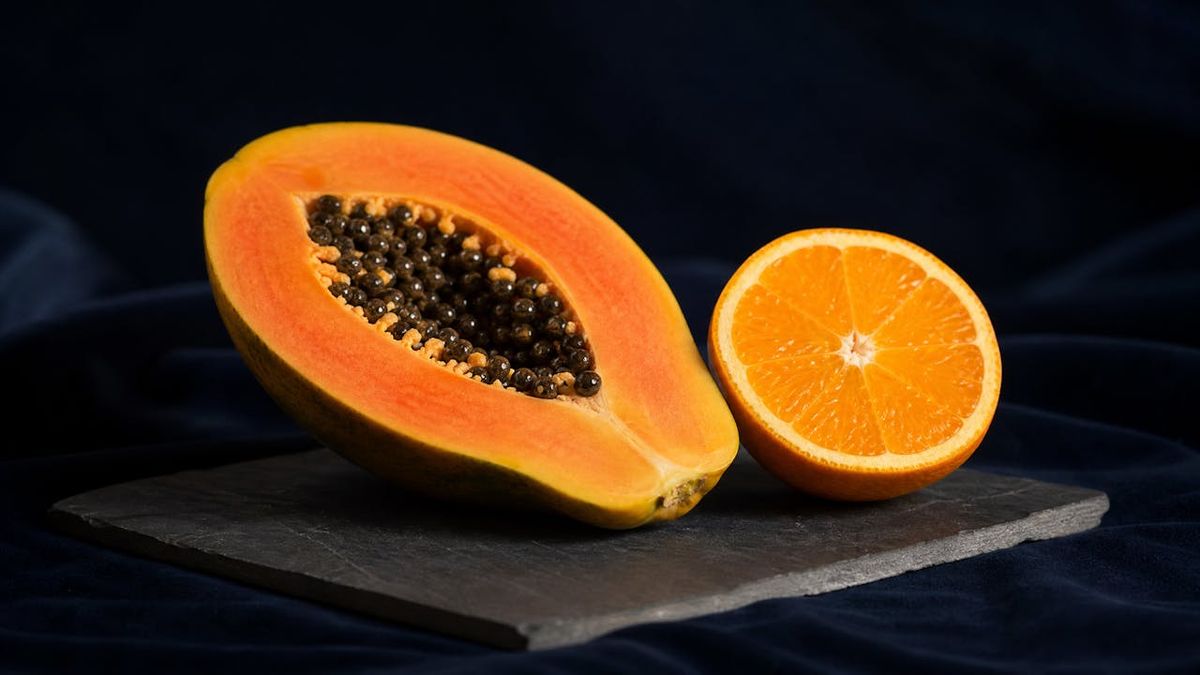
There's a video going around right now telling people over 60 that if they eat a certain fruit before bed, their vision will start clearing up by morning. Millions of views. I need to talk about it, because some of what's in that video is real science and some of it is completely made up. I'm a cataract surgeon; I've spent my entire career inside the human eye. Let me tell you which parts to keep, which parts to throw out, and what the research supports. No hype, no miracle fruit. And if a cataract is already the problem, the only thing that removes it is surgery: here is what cataract surgery in Irvine involves.
The real part: your eyes do change after 60
That part isn't a scare tactic, it's biology. The number of Americans living with serious eye disease is climbing fast, mostly because our population is aging. The National Eye Institute projects that the number of people with age-related macular degeneration, cataracts, and glaucoma will roughly double by 2050. So if you feel like your vision isn't what it was, you're not imagining it, and you're far from alone.
The grain of truth the video is built on
The whole "eat it before bed" framing borrows a real fact about your retina at night. The cells that let you see in dim light, your rod photoreceptors, are the most energy-hungry cells in your entire body, and in darkness they actually work harder, burning roughly 50% more oxygen than they do in bright light. At the same time, the outer retina has no blood vessels of its own; it's fed entirely by a layer of tiny vessels behind it, and with age that layer thins and narrows. High demand, tighter supply. That's why the aging retina is genuinely more vulnerable overnight.
But here's where I have to correct the viral video. It calls this a nightly "repair window." That's the wrong word. Night isn't when your retina repairs; night is when it's under the most stress. You're not feeding an overnight repair machine. You're supporting tissue that works hard under pressure every night for years, and that is a goal nutrition can genuinely help with.
The four foods with real research behind them
Leafy greens. The bedrock. Spinach, kale, and eggs supply the pigments lutein and zeaxanthin, which concentrate in the macula, the central part of your retina responsible for sharp, detailed vision. They physically filter damaging blue light and mop up oxidative stress. This is the best-established eye nutrition science we have, and the foundation of the large AREDS2 trial run by the National Eye Institute.
Goji berries. There's a real, recent study here, and I want to represent it honestly. Researchers at UC Davis had healthy adults eat about an ounce of dried goji berries five days a week for 90 days, and found a measurable increase in macular pigment density: essentially more of that protective filter in the retina. Interestingly, a standard supplement didn't move the needle the same way in that study. One caveat: those participants were middle-aged, not 80. This was prevention in healthy eyes, not a cure for existing disease. But it's a real result, and goji berries are one of the richest natural sources of zeaxanthin on the planet.
Berries and colorful foods. Watermelon is rich in citrulline, an amino acid your body uses to make nitric oxide, which relaxes and widens blood vessels, at least in principle helping blood flow to the eye. Blueberries are loaded with anthocyanins too, but I'll be straight with you: a lot of the blueberry vision headlines come from studies measuring brain processing speed, not eyesight. I won't promise sharper vision from blueberries, but a diet full of deeply colored plants supports the whole system, and that's not nothing.
Blackcurrants, the one with the strongest single study. A two-year randomized, placebo-controlled trial gave open-angle glaucoma patients 50 mg a day of blackcurrant anthocyanins on top of their usual glaucoma drops. The result: improved blood flow at the optic nerve and slower loss of visual field compared to placebo. That's a real, well-run study in actual patients, added to their standard treatment, not instead of it. If there's a headline food here, it's this one, not the papaya the viral video builds up to.
Can papaya dissolve my cataracts?
The video's grand finale is papaya. It claims an enzyme in papaya called papain travels to your eye and dissolves the proteins that cloud into cataracts. As a cataract surgeon, let me be direct: that is not possible. Papain is a protein. When you eat it, your stomach breaks it down into amino acids like any other food, long before it could reach your eye. It cannot swim up to your lens and reverse a cataract. No food can. Once a cataract is dense enough to affect your life, surgery is the only thing that removes it, and it has one of the strongest safety records in medicine.
It gets worse. That video cites official-sounding studies that don't hold up: a dragon fruit trial I could not find published anywhere, and a name-drop of a real journal, JAMA Ophthalmology, for a 2023 study that has nothing to do with eating fruit before bed. The name was borrowed to make the video sound credible. And many of the videos pushing this claim are fronted by AI-generated avatars, all reading the identical script across dozens of channels under dozens of different doctors' names.
How to spot fake AI doctor videos
Three quick tells. One, watch the face: AI avatars have that too-smooth skin, and the blinking never quite matches the words. Two, search a sentence from the video: if the exact same script shows up on a dozen channels under a dozen different doctors' names, no real doctor wrote it. Three, look at the description: real medical channels link their sources. These videos name-drop journals but never link a single study, because the studies don't exist. There are a lot of AI-generated doctors on YouTube now, which is why I put my real face in videos like this one.
What actually protects your vision after 60
Food matters for your eyes. Leafy greens, colorful berries, blackcurrants, goji: a diet rich in those pigments genuinely supports aging retinal tissue. Two practical tips backed by chemistry: eat them with a little healthy fat, like a few nuts or some olive oil, because these nutrients need fat to absorb; and don't wash them down with a big glass of milk, because a lot of calcium at the same moment can blunt absorption. But food is support, not a cure. It will not reverse a cataract, it will not undo macular degeneration, and no fruit is going to clear your vision by morning.
And the single most powerful thing you can do for your eyes after 60 isn't in your fruit bowl. It's a comprehensive dilated eye exam. The diseases that steal sight quietly, like glaucoma, give almost no warning until the damage is done. Catching them early is what saves vision. That one appointment does more for your eyesight than every fruit in that video combined.
Related reading: AREDS 3 vs AREDS 2: should you switch your eye vitamins? · the only 5 things that actually slow cataracts · when it is time for cataract surgery · or see what cataract surgery in Irvine involves.
Sources: Li et al., goji berry intake and macular pigment in healthy adults (Nutrients 2021)
Two tools that may help you think this through: the 60-second lens quiz, and the vision simulator, which shows how each lens sees by day and at night.
When was your last dilated eye exam?
It does more for your vision than any miracle fruit. Schedule with Dr. Driver at OC Eye Associates in Irvine.
Call (949) 653-9500Read next

This article is for educational purposes and is not a substitute for a medical examination or personalized medical advice.