When Is It Time for Cataract Surgery? (It's Not the Eye Chart)
Published July 11, 2026 · Updated September 22, 2026 · Medically reviewed by Todd Driver, MD
Quick answer: It's time for cataract surgery when cataracts interfere with your life, not when you fail the eye chart. Night driving fear, glare, and giving up activities matter more than the letters you can read, because the chart measures vision under perfect lighting and contrast conditions.

When is it actually time for cataract surgery? Here's the answer nobody tells you: it has almost nothing to do with the eye chart. If you can still read the letters at your exam, but night driving feels white-knuckle scary and glare is ruining your life, your cataracts may already be holding you back more than you realize.
In this article I'll walk through how cataract surgeons decide when surgery makes sense, which symptoms matter most, and how to know whether it's time for that conversation or whether waiting is completely reasonable. Both can honestly be the right answer.
Can my cataracts be bad if I can still read the eye chart?
The biggest misconception I hear is "I can still read the letters, so my cataracts must not be that bad." The problem: the eye chart measures sharpness under perfect conditions. High contrast, controlled lighting, one letter at a time. Real life is not an eye chart.
Cataracts scatter and distort light. Contrast sensitivity drops, glare becomes a real problem, and depth perception gets worse. Plenty of people pass the chart with flying colors and still struggle every single day. Cataracts change how you see, not just the line you can read.
"I see fine. I just don't drive at night anymore."
Because cataracts progress so slowly, most people don't notice their vision changing. What they notice is their life changing. The most common report I hear: night driving has gotten worse. Headlights feel blinding. Lights flare into starbursts and halos.
And then comes the phrase so many of my patients use: "I see fine. I just don't drive at night anymore." That isn't a preference, and it isn't just getting older. That's quietly rearranging your life around a vision problem we can fix. People stop going out after dark and avoid unfamiliar places, and that's really about independence, mobility, and confidence, all of which tie directly to your overall health.
"My optometrist can't get my glasses right"
The second thing I hear all the time. Usually the glasses are fine. The problem is that the lens inside your eye is getting cloudy, and no prescription, however perfect, can sharpen an image passing through a cloudy lens. Each new pair of glasses helps a little less than the last. If a new prescription doesn't crisp things up the way it used to, it's time for a complete eye exam to find out whether cataracts, or something else, is the real culprit.
What is the real cost if I wait too long for cataract surgery?
Cataract surgery is almost never urgent, but waiting too long has real costs. Vision changes affect balance, make you misjudge curbs and steps, and raise fall risk. And the research here is remarkable: large studies have associated cataract surgery with lower dementia risk, better cognitive scores, fewer falls, and fewer hip fractures. There are even MRI studies suggesting the brain's visual centers become more active after surgery.
The key is balance. Don't rush into it, but don't ignore meaningful symptoms either.
What I actually look for
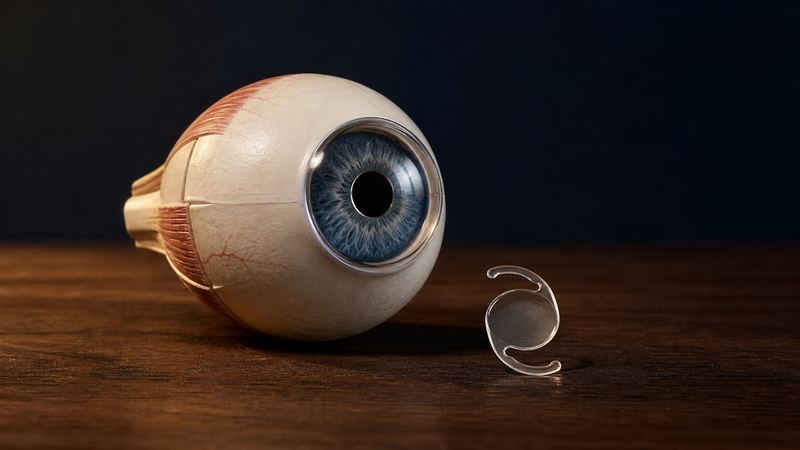
A complete exam checks the health of the whole eye and asks one question: is the cloudiness of your natural lens the real source of your visual problems, or is it a glasses change, dry eye, or something else? If it is the lens, replacing it with one custom-fit to your eye usually restores sharp, clear vision, and often reduces your need for glasses at the same time.
The bottom line
Cataract surgery isn't about a number on an eye chart. It's about how your vision affects your comfort, your confidence, and your safety. If vision changes are limiting what you do, have the conversation with your eye doctor, or read what cataract surgery in Irvine involves. If your symptoms are mild, waiting is completely reasonable, and no one should rush you.
Sources: Lee et al., association between cataract extraction and lower dementia risk (JAMA Internal Medicine 2022) · Tseng et al., fracture risk after cataract surgery in Medicare beneficiaries (JAMA 2012) · 2025 matched-cohort study of falls, fractures, and head injuries after cataract extraction (J Am Geriatr Soc)
Related reading: what cataract surgery actually feels like · evidence-backed ways to slow cataracts · or see what cataract surgery in Irvine involves · the three fears patients rarely say out loud. · new to cataracts? Start here
Two tools that may help you think this through: the 60-second lens quiz, and the vision simulator, which shows how each lens sees by day and at night.
Rearranging your life around your vision?
Schedule an evaluation with Dr. Driver at OC Eye Associates in Irvine.
Call (949) 653-9500Read next

This article is for educational purposes and is not a substitute for a medical examination or personalized medical advice.