Is Cataract Surgery Scary? What You'll Actually See and Feel
Published January 14, 2026 · Updated August 27, 2026 · Medically reviewed by Todd Driver, MD
Quick answer: Cataract surgery is far gentler than most patients expect. The procedure takes about ten minutes, uses numbing drops instead of shots, and is done under twilight sedation, so most patients remember very little. You cannot watch it happening: the microscope light fills your vision with soft colors instead. In a published series of 216,141 consecutive cataract surgeries, serious infection occurred in 0.016 percent of eyes, fewer than 1 in 6,000.
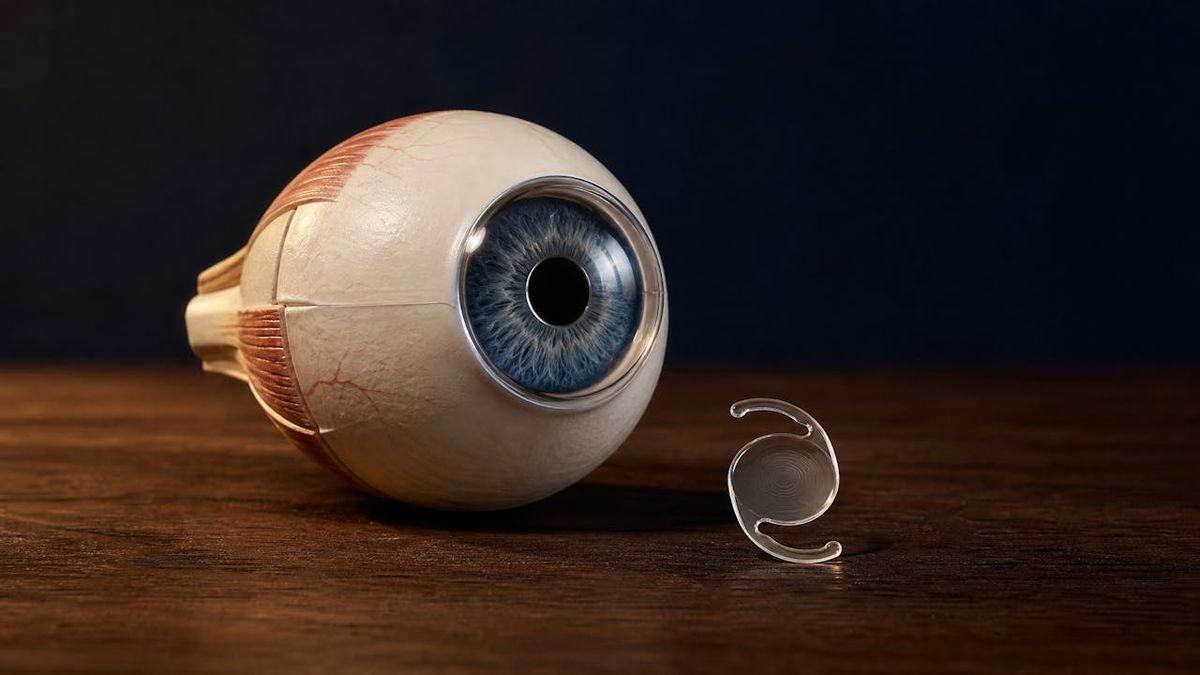
The two fears I hear most often about cataract surgery are simple: "It's going to hurt" and "It's going to be scary." I want to address both directly, because neither matches what actually happens. In the time it takes to wait in line for a latte, about ten minutes, we can replace the cloudy lens inside your eye and dramatically, permanently improve your vision.
For me, cataract surgery is routine. I've performed it thousands of times. But for you, it's a big moment, and what usually makes it scary isn't the result. It's the unknown. So here is exactly what happens, step by step, with no surprises.
First, what is a cataract?
A cataract is when the natural lens inside your eye slowly becomes cloudy, much like the lens of a camera fogging over. Cataract surgery removes that cloudy lens and replaces it with a clear artificial one.
Does it hurt? Will I see it happening?
The two questions I hear most are "Does it hurt?" and "Will I see you coming at my eye?" The answer to both is no. We use twilight sedation, the same level used for a colonoscopy: you're awake but deeply relaxed, and most patients drift in and out of sleep remembering very little. You breathe on your own, with no breathing tube. And for most patients in modern cataract surgery there are no numbing shots. A few drops numb the eye within seconds.
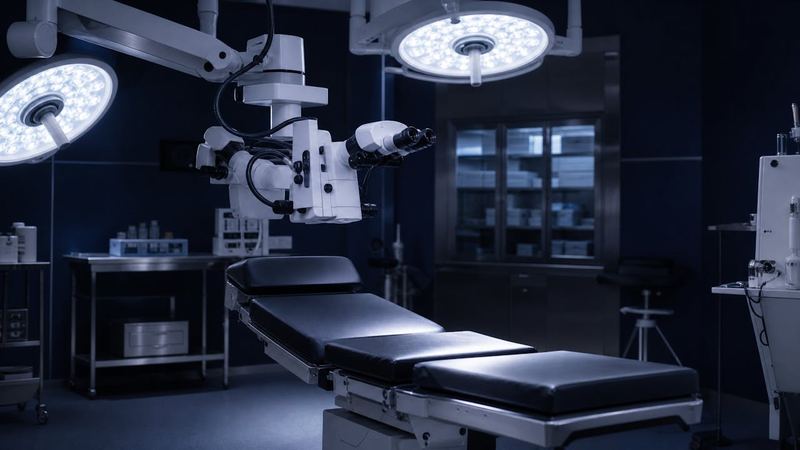
You also can't watch the surgery. The microscope light is bright and close, so your vision fills with light. Most patients describe soft, shifting colors, blues, pinks, and whites. Some tell me it looks like a kaleidoscope. Many describe it as a genuinely beautiful visual experience.
What actually happens during those ten minutes
I make a very small incision at the edge of the cornea, the clear front surface of your eye. It's about 2.4 millimeters wide, smaller than the tip of a pen, and because it's so small it seals on its own with no stitches.
Next, using gentle sound waves, a tiny instrument carefully breaks the cloudy lens into small pieces and removes them through that incision. Then comes the interesting part: the new lens is about 6 millimeters wide, but the opening is only 2.4. So we roll the implant like a tiny burrito, place it in an injector, and guide it into the eye, where it slowly unfolds and settles into its natural position.
That lens becomes a permanent part of your eye. A cataract can't grow back, because a cataract is your natural lens clouding, and that lens is gone. If a thin film ever develops behind it years later, we treat it with a quick in-office laser procedure.
"We're all done."
When I say those words, almost every patient responds the same way: "I didn't even know it started." We place a clear shield over the eye, mainly to prevent rubbing while you sleep. You sit up, have some juice, and go home to rest.
Your vision will be foggy at first, but by the next day the fog usually starts to lift. I tell my patients it's like taking off brown-tinted sunglasses after wearing them for decades. Within a few days, vision is typically much sharper than before surgery, and colors far more vibrant.
If you've been putting off cataract surgery because you're afraid of the process, I hope this took away some of that fear.
Related reading: what to do the night before surgery · watch a real laser cataract surgery · why your second cataract surgery feels different · the real safety statistics of cataract surgery · when it is time for cataract surgery · cataract surgery in Irvine with Dr. Driver · or the three fears patients rarely say out loud.
Two tools that may help you think this through: the 60-second lens quiz, and the vision simulator, which shows how each lens sees by day and at night.
Wondering if it's time for cataract surgery?
Schedule a consultation with Dr. Driver at OC Eye Associates in Irvine.
Call (949) 653-9500Read next


This article is for educational purposes and is not a substitute for a medical examination or personalized medical advice.