Cataract Surgery After RK: Why It's Harder and What Actually Works
Published August 13, 2026 · Updated September 22, 2026 · Medically reviewed by Todd Driver, MD
Quick answer: RK makes cataract surgery more challenging in two ways: the old incisions complicate the surgery itself, which your surgeon plans around, and the cornea's permanently shifting shape makes lens power calculations the least accurate in eye surgery. The Light Adjustable Lens, adjusted after your eye heals, changes those odds: in a recent study of 94 RK eyes, 82 percent saw 20/25 or better without glasses.
My RK patients ask me: "Does RK make my cataract surgery harder?" If you've had LASIK, I tell my patients the answer is no, and yes. If you've had RK, the answer is just yes. Yes on the surgery, and especially yes on choosing your lens. There's also one lens that changes the odds more than anything else, and I'll get to it.
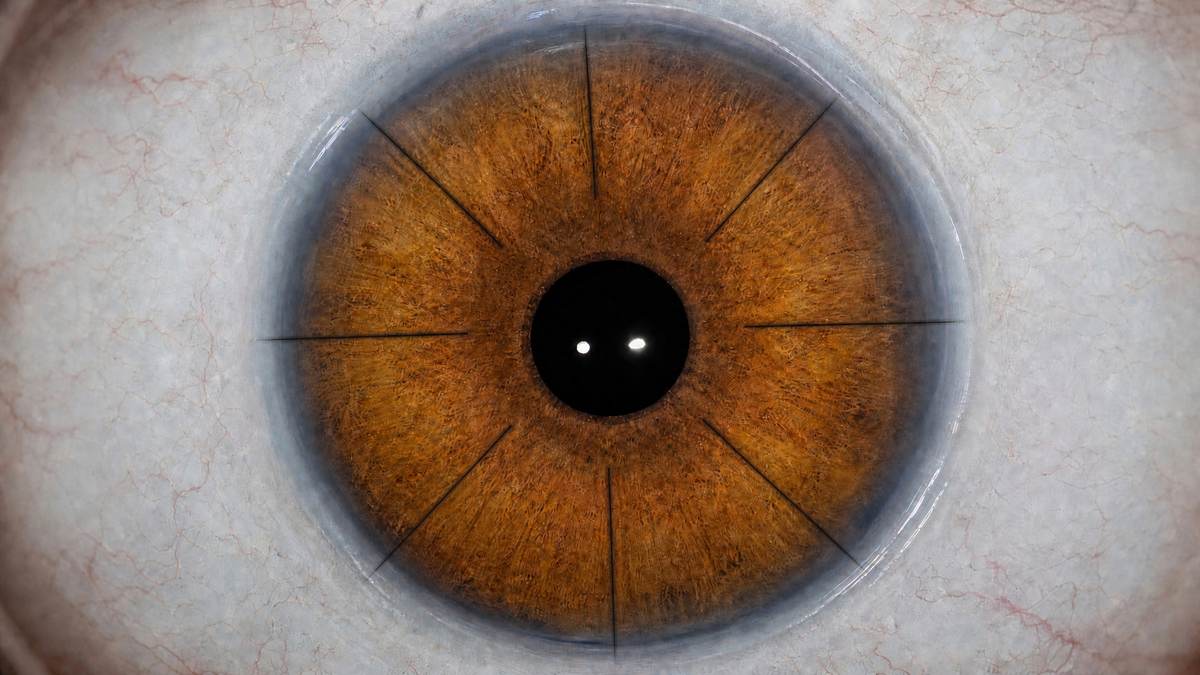
RK, radial keratotomy, is a very interesting procedure from the '80s and '90s, before LASIK existed. Surgeons made deep, spoke-like cuts in the cornea, the clear covering on the front of your eye, to get people out of glasses. When I say deep, I mean deep: these cuts go about 90 percent of the way through the cornea.
The surgery is more demanding, and we plan for it
Those deep cuts can affect where I place my incisions. There's a chance your cornea can splay open along those old cuts during surgery. This is something an experienced surgeon plans for before even entering the room: I look at your RK cuts ahead of time and plan my incisions around them, and if needed I operate from a different position or use a different incision type than usual. The goal of all that planning is simple: your eye sealed and settled properly after surgery. Beyond that, the mechanics of taking out the cataract and putting in a new lens implant are exactly the same as in a normal eye.
What is much, much more difficult after RK is choosing the lens.
Your cornea never stopped changing
Here's the thing people didn't know about RK in the '80s: RK makes the shape of your cornea unstable, permanently. If you've had RK, you may have noticed it yourself: your vision in the morning can be different from your vision at night. The old incisions swell slightly overnight and settle as the day goes on, so the cornea's shape genuinely shifts through the day. And it keeps changing over the years, too. In the major long-term RK study, 43 percent of eyes drifted farsighted by a full diopter or more over ten years. A diopter is a big unit in glasses terms: a full diopter is the kind of change that sends you back for a new prescription.
That's the problem for cataract surgery. We use the shape of your cornea in our formulas to choose the power of your lens implant, and RK turned that measurement into a moving target. This is the same lens-accuracy challenge I described in my article on cataract surgery after LASIK, but harder: LASIK changed the cornea once, and RK left it changing forever.
There are formulas designed to help with RK, but I tell my patients: in my experience, those formulas are not very accurate at all. A common approach is to aim about one diopter nearsighted of what the formula shows and hope everything settles as expected. With a traditional lens, there's a pretty significant chance you will not land exactly on target.
Which lens do I reach for after RK?
With RK, in my opinion, by far the best option is the Light Adjustable Lens. It's a lens whose power we can adjust after it's inside your eye, and that matters more for RK than for anybody else, because we can let everything settle first. The cornea is especially unstable for the first few weeks after cataract surgery because of swelling. With the Light Adjustable Lens, we wait until your cornea settles back toward its natural shape, then check whether any glasses prescription is left over. If there is, we correct it by shining UV light on the lens, right in the office. (How the lens works, in detail: my guide to the Light Adjustable Lens.)
There's now a real study on this, in 94 eyes with prior RK. After the light adjustments, 82 percent of patients could see 20/25 or better without glasses; 20/25 is one line shy of 20/20. Before the adjustments, running on formulas alone, only about 44 percent of those eyes were on target. That's the swing the adjustability buys you. It also means results aren't guaranteed: roughly one in five eyes in that study still needed some help from glasses, and no lens removes RK's uncertainty completely. Two practical caveats as well: the Light Adjustable Lens is a premium lens, so insurance treats it as an upgrade, and the light treatments take several office visits, with UV-protective glasses worn in between.
I've seen what it can do in my own patients. One patient came to me barely able to see sharply even with scleral contact lenses, the large specialty contacts we use when glasses and regular contacts can't do the job, and a super thick glasses prescription on top of that. It was a very hard time for her to see anything. After cataract surgery with the Light Adjustable Lens, she was able to see 20/25, and she barely needs glasses anymore. I'm not going to say that will happen to everyone who's had RK. But that's the sort of outcome this lens makes possible, and I don't believe she could have gotten there with a traditional lens.
The bottom line
RK makes cataract surgery more challenging, partially from a surgical technique standpoint, but mostly from a lens-selection standpoint. Will your result be as good as a normal eye's? Often it can come close, and sometimes it's better than anyone expected, but RK eyes carry more uncertainty than any other kind, and honest surgeons say so out loud. If you've had RK and you're facing cataract surgery: find a surgeon with real experience operating on RK eyes, and ask whether the Light Adjustable Lens makes sense for your eye. That decision gets made together, at an exam, with your measurements in hand.
Common questions
Is cataract surgery riskier if I've had RK?
It's more technically demanding, because the old RK cuts can affect incision placement and healing. An experienced surgeon examines your RK pattern ahead of time and plans around it. The bigger challenge is choosing the right lens power for a cornea that never fully stabilized.
Why is my vision different in the morning than at night?
The old RK incisions swell slightly overnight and settle during the day, so your cornea's shape genuinely shifts. That same daily shift is a big part of why lens formulas struggle with RK eyes.
What lens do you recommend after RK?
For most of my RK patients, the Light Adjustable Lens, because its power can be adjusted after the eye heals. In a study of 94 post-RK eyes, 82 percent saw 20/25 or better without glasses after adjustments. Whether it's right for your eye is a decision to make with your surgeon at an exam.
Will my results be as good as a normal eye?
Often close, sometimes surprisingly so, but RK eyes carry more uncertainty than any other category, and about one in five eyes in the study above still needed some glasses help. The adjustable approach narrows the gap; nothing erases it.
Sources: StatPearls (RK incision depth); PERK 10-year study (diurnal shift and hyperopic drift, Arch Ophthalmol 1994); JCRS Light Adjustable Lens post-RK series (94 eyes, 2025).
Related reading: cataract surgery after LASIK · the Light Adjustable Lens explained · refractive surprise explained · or Light Adjustable Lens candidacy in Irvine.
Two tools that may help you think this through: the 60-second lens quiz, and the vision simulator, which shows how each lens sees by day and at night.
Had RK and facing cataract surgery?
RK eyes need a surgeon who plans for them. Schedule with Dr. Driver at OC Eye Associates in Irvine.
Call (949) 653-9500Read next
This article is for educational purposes and is not a substitute for a medical examination or personalized medical advice.